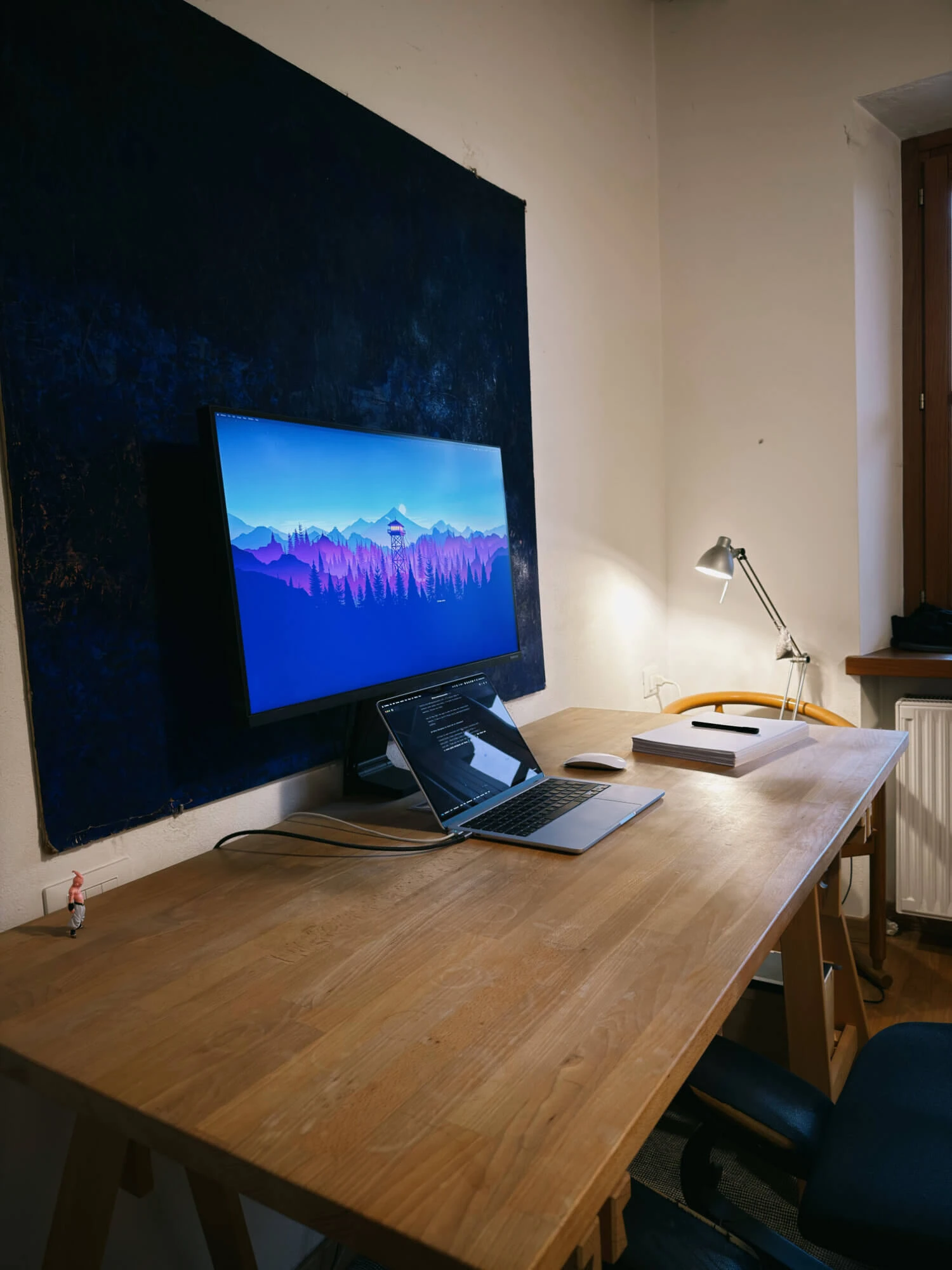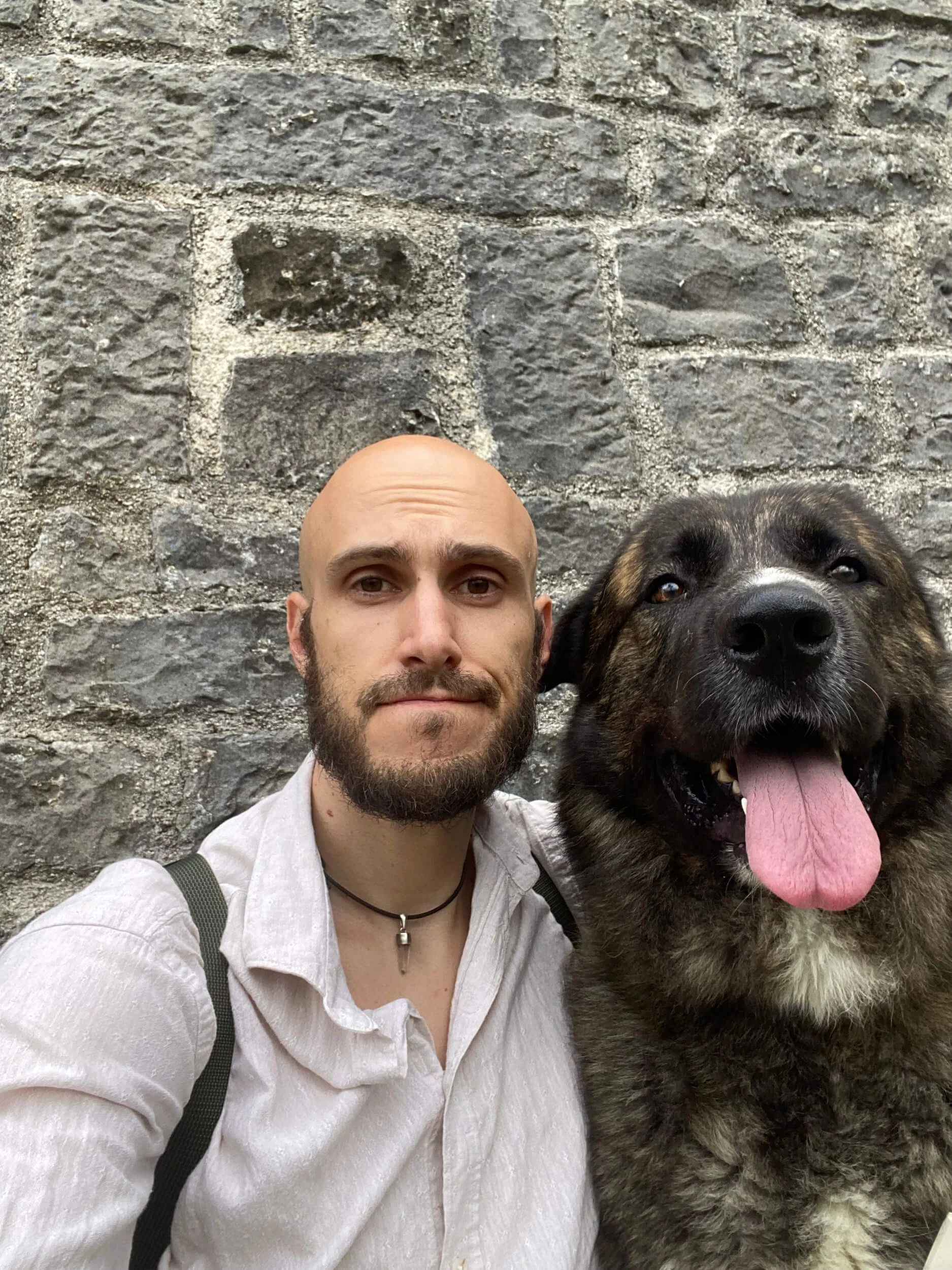
Tell us a little bit about yourself
These days, when I’m asked to describe myself, the most compact answer I can give people is that I’m a writer, which is both 100% true and also completely deceiving. I write code professionally, for the most part, but also write content for the web, recreationally.
When it comes to the professional side of my life, I’m what people used to call a designer-who-codes. These days there’s probably some nonsensical corporate title for people like me, but I don’t work corporate and so designer-who-codes it is. To be even more precise, the best description I can give you is developer-who-codesigns.
My design background is quite odd. I graduated from an art high school where I studied to be a goldsmith. I then went on and started university to learn architecture, only to then drop out and get an education in traditional graphic design. The dev side is all self-taught, and I’ve been freelancing full-time for 15 years.
Thanks to my odd background, I find myself working very well alongside design studios. That’s because a lot of developers lack the “design sensibility” if we can call it that way, and they simply see themselves as a translation layer, from static design to functional website.
I, instead, see myself more like a design partner, and because I can understand well the intentions behind a design, I can provide feedback and also provide alternatives when I see that a design can be improved or tweaked.
But I also do some server admin, and a bunch of other stuff, like most freelancers. I need to juggle a bunch of different hats. I still occasionally do full designs, but that’s rare these days.
In terms of projects, I work almost exclusively on marketing sites, portfolios, stuff like that.
What are the first questions you ask at the beginning of every project?
I’m lucky enough to pretty much always be one step removed from the actual clients. I interact with studios; they interact with the clients (lucky me). But when I do design, I don’t have a set of questions I ask. The only thing I always find myself asking clients is if they have sites they like, just to see what kind of design taste they have. Other than that, each project is different, and so each one requires a different set of questions to figure out where to go, and what to do.
How do you approach pricing with clients? How did you arrive at this?
Ah, the impossible question. I’m 15 years in, and I still struggle hard. I have a very complicated relationship with money and the concept of getting paid for work, and I have a hard time putting a financial value on what I do. The way I went about figuring out how much to charge at the beginning was finding out the average salary in my area (average globally, not for my specific profession) and using that as a starting point. Added taxes and all that, and I ultimately landed on a price.
I almost always quote full projects; I don’t work hourly or daily. It happens extremely rarely, and only for very small tasks. For dev work, I have a simple document I set up in a lovely app called Numi where I have 3 variables I can tweak, and it gives me a number. Those 3 variables are my daily rates (currently 300€), fixed expenses for that particular project (domains, licenses, that kind of stuff) and how many days I think it’s gonna take me to code a specific site.
It’s not a perfect system, but I don’t think there’s a single freelancer out there who has a perfect system. And if they say they do, they’re probably lying to you.
Because I work on projects, I don’t usually track my time, but I am trying to be better at that anyway, just to see if my estimates for projects are correct and to do that I’m currently using Timemator.
What are the first things you do when you start a new project?
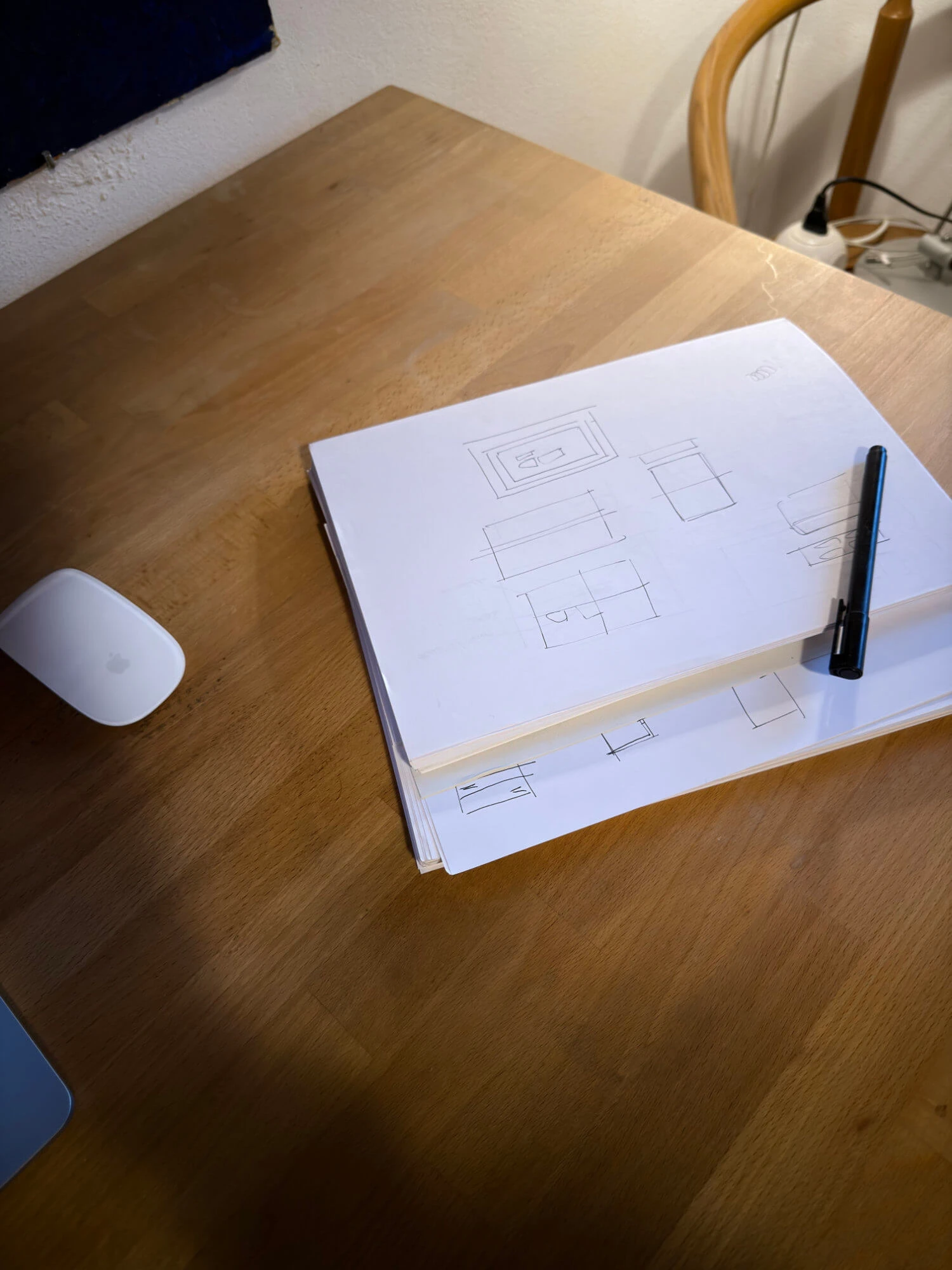
For dev work, I set up my local environment, and I start coding. If it’s a design job, I start by browsing a lot of sites and sketching wireframes with pen and paper. I’m old school; I like to use paper and pen because for some reason I feel more connected to my brain that way. Also, when I sketch, I’m already visualising a more polished design in my head.
What does your moodboarding process look like? Where do you source inspiration?
I don’t do moodboards. I look, I browse, I sketch, and then I start coding. In terms of places, there’s a bunch of sites I browse depending on what I need to design, like Siteinspire, Typewolf, or Dead Simple Sites.
What’s your favourite part of the design process? Why?
Figuring out the best typeface for a project and setting up a typographic scale. Because I design everything based on typographic scales and baseline grids, so that part is where I feel the project takes shape, even if I have not designed anything yet. But once that’s done, I can feel the momentum growing.
Are there any parts of your process that go against received wisdom? Or common steps that you skip? Why?
When I do design, I think I skip basically all steps. The whole wireframing and flowcharting and all that, that’s gone. I research, I sketch on paper, I visualise in my head, I start coding, and as the site takes shape I use it, and I refine it. That’s probably an unorthodox way to design, but it works for me.
Is there anything else you suspect is unique/unusual about your practice?
I think there aren’t a lot of developers who collaborate with designers this closely to the point of suggesting tweaks to the design and even designing entire parts themselves. I often make designs scale for small screens or tweak parts on my own, because I know the designers I work with trust my design judgment. I’m sure I’m not the only one who does this, but I also think it’s not super duper common.
If you’re collaborating with anyone (copywriters, illustrators, developers, etc): when do you bring them in? How do you handle project management?
I’m gonna tackle this one from the opposite side since I’m the one who’s often brought in. I like when I get involved early in the design process and when designers ask for my opinion at the beginning because that helps tremendously. There are times when small changes to a layout can speed up the dev time tremendously, but it’s hard to get to those changes if I’m only shown a design once it’s done and approved by the client.
As for project management, I work on small projects most of the time, so that part is not that complicated. I don’t use special tools or anything like that. I write stuff down, send emails, do calls on Meet, and that’s about it.
What’s been the most impactful change you’ve made to your process? Where did you hear about that?
Honestly, my process has been mostly the same for 15 years. The tools have changed over time, but it’s been a slow and gradual process, replacing something when it was worth replacing, adding a tool when I felt necessary, removing one when it was no longer needed. I never had that moment where something radically changed the way I work. I don’t chase trends; I don’t jump on new tools.
What bits of the process are non-negotiables for you?
The getting paid part at the end :)
Kidding, I honestly don’t know how to answer this. I don’t think there is a single step that’s skippable in the process, so I think all of them are non-negotiable.
How do you organise design files?
I half leveraged the .decimal system, and I have folders that are organised by area (friends, personal, clients) and within those I have folders for each project. I keep on my machine a bunch of projects that are in progress or finished recently, and once or twice a year I move everything to a backup hard drive.
I’m not the most well-organised person in the world, I have to admit. That’s definitely an area where I can do better.
What does design hand-off look like for you?
In my case is website hand-off, and I send clients—or friends—a link to the finished website hosted on my dev server. I let them play with it, and they can then send me feedback if there’s anything they want me to change. There’s often not too much back and forth, but it occasionally happens.
Looking back over the last 12 months, how do people find out about you?
Word of mouth. Almost 100% of the time. Been like that for almost my entire working career, which is why I never bothered making myself a proper portfolio.
What elements of the process create speed bumps or challenges? How do you get out of these ruts?
The last 10% to push a project over the finish line is always the more challenging. Content that’s missing, waiting for content from clients, sorting out the smallest of details- that’s always a pain.
I’m now trying to do as many of those things as possible at the beginning; this way I don’t find myself having to deal with a plethora of small tasks all at the end when I think I’m finally done. That’s another aspect of my job I’m getting better at.
How do you make decisions?
Gut feeling. The projects I work on are not high stakes, so there’s no reason to overthink stuff. And if I think doing something can lead to a better final result, I’m gonna do it.
If I’m designing, I’m just going for it. If I’m coding, I’m gonna talk with the designers and explain to them what I’d change and why. Because after all it’s their design, and I want them to be on board.
Favourite tool, resource or course?
Tool? Pen and paper. Hands down. I have a stack of white A4 and a black Muji gel pen that I use all the time. I take notes, sketch sites, make to-do lists, and a million other things.
As for resources, is saying “the web” a cop-out? I browse a lot and visit a lot of websites, so I don’t have a single resource worth highlighting.
That said, I will take this opportunity to highlight a site designers might find useful, though, and that’s the Visual Journal by my longtime friend Alessandro. I coded and co-designed every single version of this blog, and I think it’s an amazing digital archive.
Where can people find out more about you, keep up-to-date with what you’re doing or give you money?
I have a personal blog and a simple portfolio. I am not on any social media platform; I don’t post updates, and I often forget to update my portfolio.
If people want to know more, the best and simplest thing they can do is reach out via email. I’m always happy to interact with people over email; I’m down to answer any question, discuss any topic.
And if they feel the urge to send me money for inexplicable reasons, I have a Ko-fi profile.