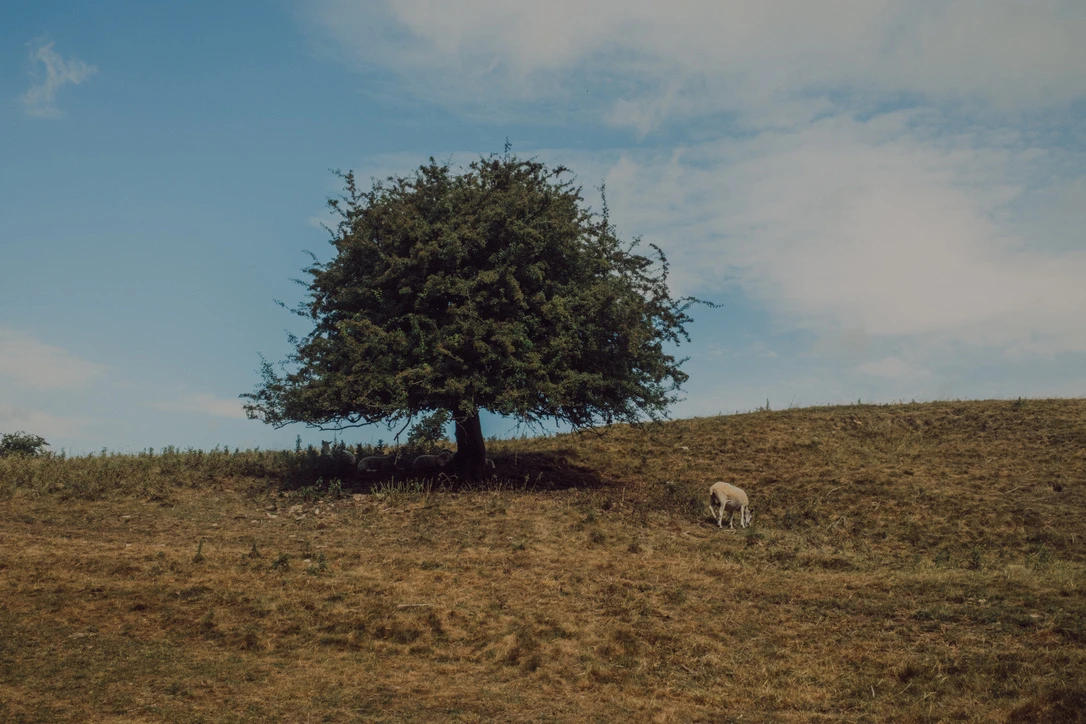
I wasn’t planning on featuring myself on here – there’s something about that that feels a bit gross – but I’m sharing these answers in the spirit of encouraging other designs to talk about their process.
Tell us a little bit about yourself
I’m an independent designer from the UK. The focus of my work lies somewhere between UX and UI design, accessibility, privacy, ethics and sustainability. I create websites, design systems and digital products, and I enjoy collaborating with developers to finish the work in the browser.
What are the first questions you ask at the beginning of every project?
I usually start with a set of questions from Dan Mall that I stumbled across a few years ago. It’s a well-rounded set of initial questions that usually gives some useful starting points.
I particularly like the “How did you hear about our work? What specifically interests you about it? Any projects that you’re keen on?” question. Working with people who want to work with you specifically, and know a bit about your work, makes a huge difference.
How do you approach pricing with clients? How did you arrive at this?
I used to charge flat project fees, but switched to charging on a time and materials basis in 2022. I’ve found it to be a flexible and transparent model with lots of upside. I wrote about it in 2023, but in short:
- I no longer spend hours putting together detailed scopes: I’ll kick things off with a small project where we start working together on figuring out the project needs and approach
- If a client wants an upfront cost, I can give them a ballpark based on previous tracking (I publish previous project durations on my site) or we can work backwards from their budget
- Billing every month is a game-changer for cash flow
When a project starts, what are the first things you do with the client?
There are three things I do at the start of most projects:
-
Create a standing weekly meet: this carves out dedicated time on the client’s side and helps project momentum
-
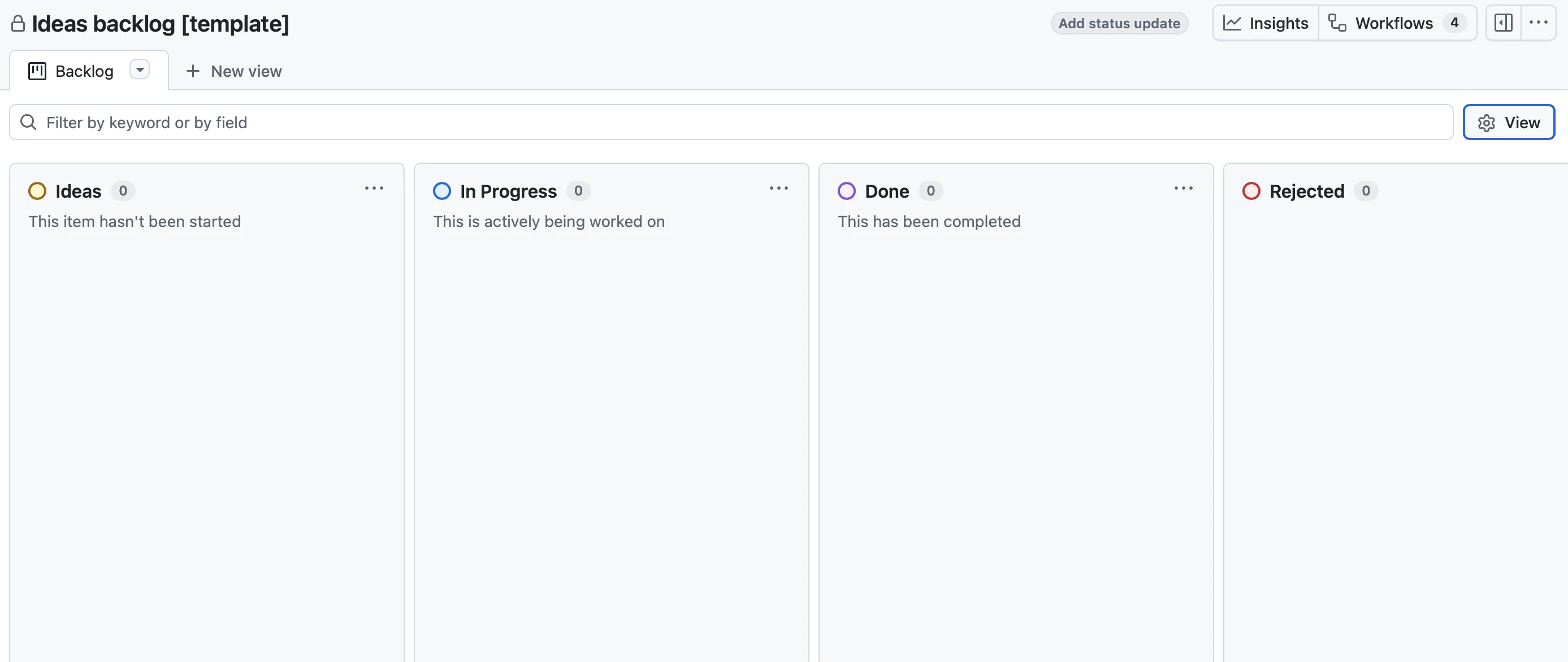
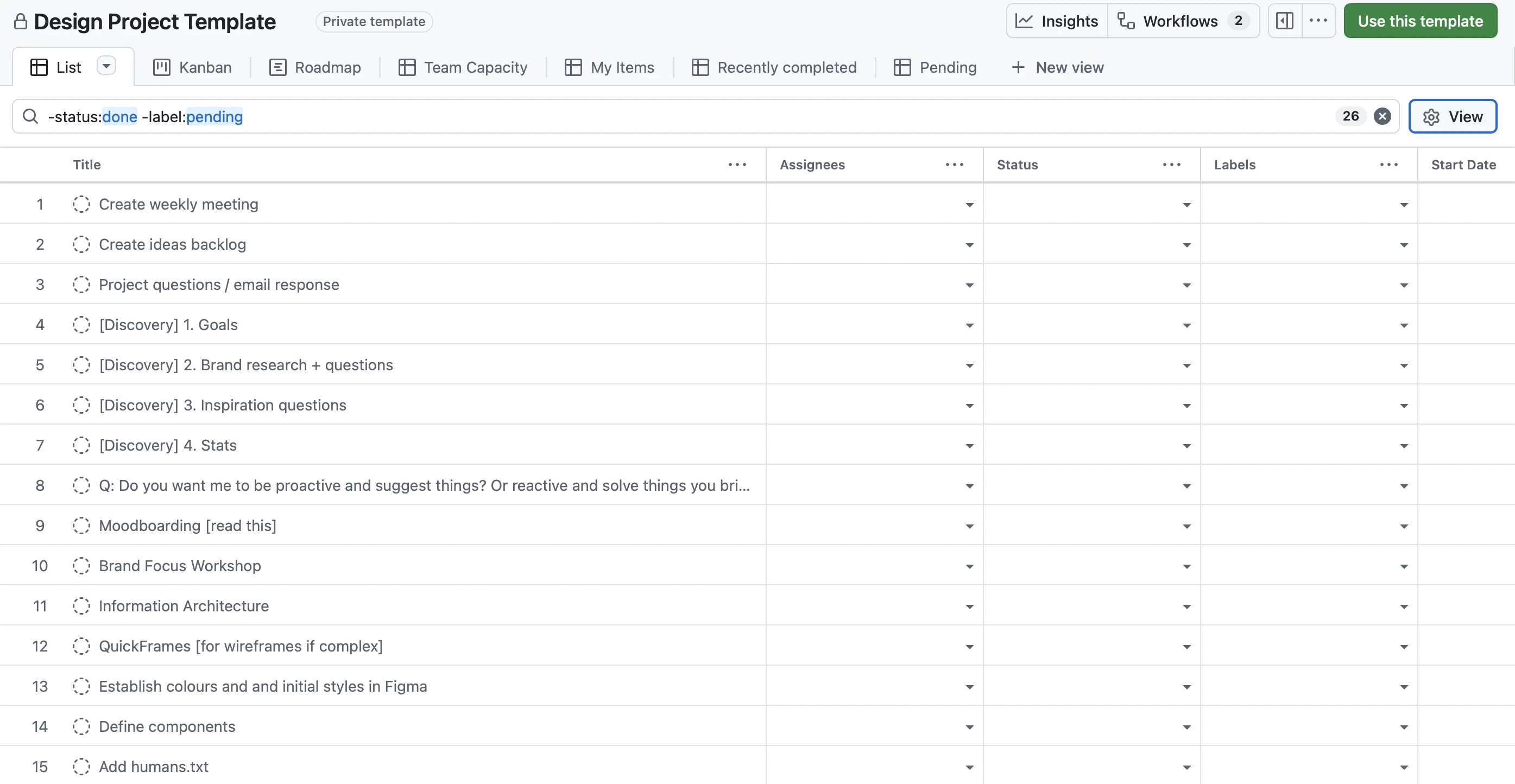
Setup GitHub: I use GitHub to manage projects, so I duplicate my project template and create an ideas backlog
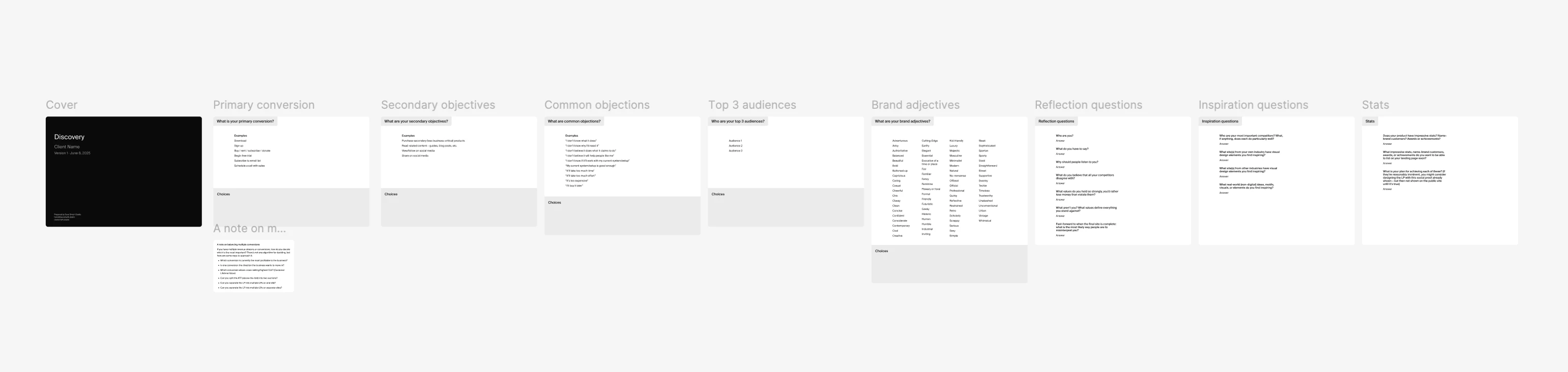
- Discovery workshop: I send this worksheet over to my client to look through. They’ll either fill it in independently for us to review together, or we can go through it in workshop.
What does your moodboarding process look like? Where do you source inspiration?
I try to make this as collaborative as possible, and usually suggest to clients that they start collecting examples of things they like as early as they can (preferably before we start working together).
I split the initial moodboards out into four sections:
- Composition / layout
- Typography
- Graphics / illustration
- Colour
I often view that my role is to push the boundaries here a bit: find out where the edges are and pull back if necessary.
I’ll also try to pull out some loose themes that we might work towards, which can be useful to pull together a more specific direction. We might also do a sorting exercise, where the shots are organised along an axis – this can sometimes help us narrow a direction.
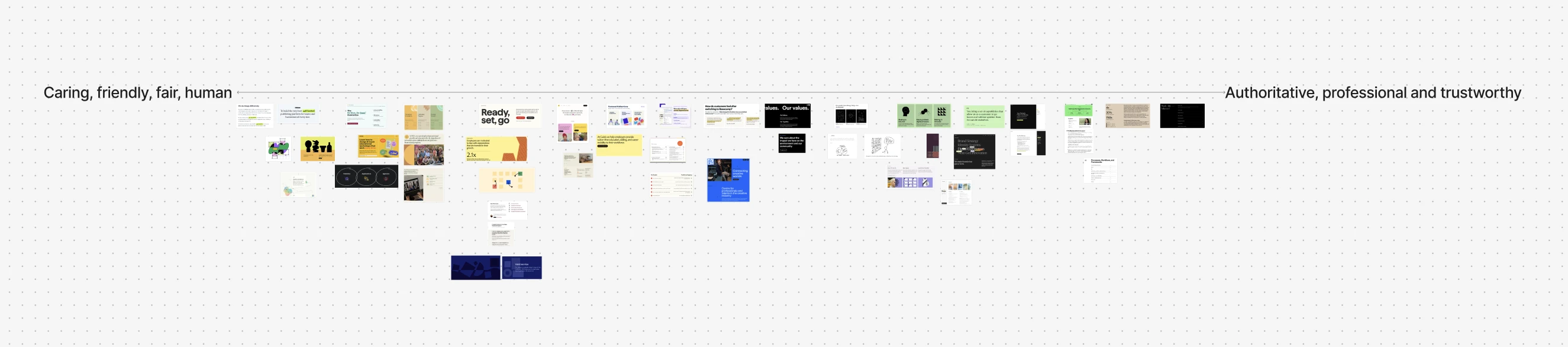
Over the past few years, I’ve been making a habit of saving inspiration to Eagle. Beyond that, typical sites I scour include Typewolf, Land-book and One Page Love.
What’s your favourite part of the design process? Why?
It might be the moment when the look-and-feel gets quite locked in, and you can see envisage how the rest of the project can come together. At that point it feels like the much of the hard work of unearthing the direction is done, and you can get on with rolling out the aesthetic across the project.
Are there any parts of your process that go against received wisdom? Or common steps that you skip? Why?
I’m not dogmatic about designing mobile-first or desktop-first – I’ll consider what the most difficult viewport is and start there.
I’m also not particularly into type scales – as Erik Kennedy says, “they might improve a good design but won’t fix a bad one”. Sometimes I’ll use one as a design constraint, but they’re rarely something I’ll use right off the bat.
Is there anything else you suspect is unique/unusual about your practice?
I don’t limit the rounds of revisions clients can make.
I usually involve clients early in the process which I’ve universally found to be effective. Clients feel involved, can see their ideas are being heard, and there’s none of the risk attached to a “big reveal”.
If you’re collaborating with anyone (copywriters, illustrators, developers, etc): when do you bring them in? How do you handle project management?
I try to bring everyone in as early as possible:
- Copywriters: my ideal is to collaborate on wireframing and work on the IA together. Then keep them in the loop through the design phase.
- Illustrators: once we have a good idea of the look-and-feel, along with some idea of the illustration style we’re after.
- Developers: I generally try to keep developers in the loop on the project through the design phase, seeking feedback on approaches and accessibility considerations.
Project management-wise, I’ll try to handle this if I’ve brought the team together (I’ve learned that someone has to volunteer to handle this, otherwise it ends up not being handled).
What’s been the most impactful change you’ve made to your process? Where did you hear about that?
Getting clients to commit to a regular meeting was a real game-changer for me. It’s helped projects happen that otherwise would have stalled (momentum is an underrated quality in a project) and allowed me to develop better relationships with clients over the years.
I picked this tip up from architecture client I had several years ago, and never looked backed.
What bits of the process are non-negotiables for you?
The weekly meeting! I’d also put the discovery phase into this: the answers might feel obvious, but the process usually unearths useful bits of information that might not have been revealed otherwise.
How do you organise design files?
It depends how big the project is, but I’ll usually have at least two files: a messy working file, and a separate file for client review.
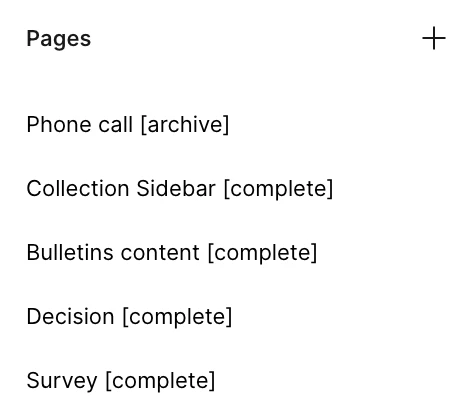
In bigger projects, I’ve found it really helpful to tag the status of pages, and I’m trying to make an effort to this on all projects:
What does design hand-off look like for you?
For a small marketing site, I’ll either create a new design file with “clean” components for development, or separate an area in the Figma file:
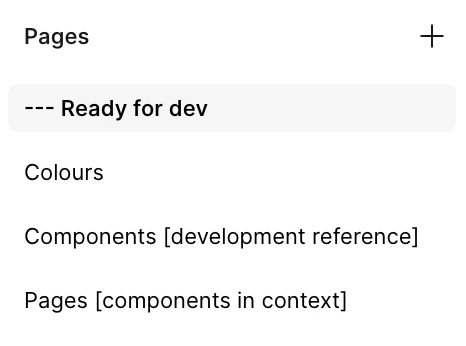
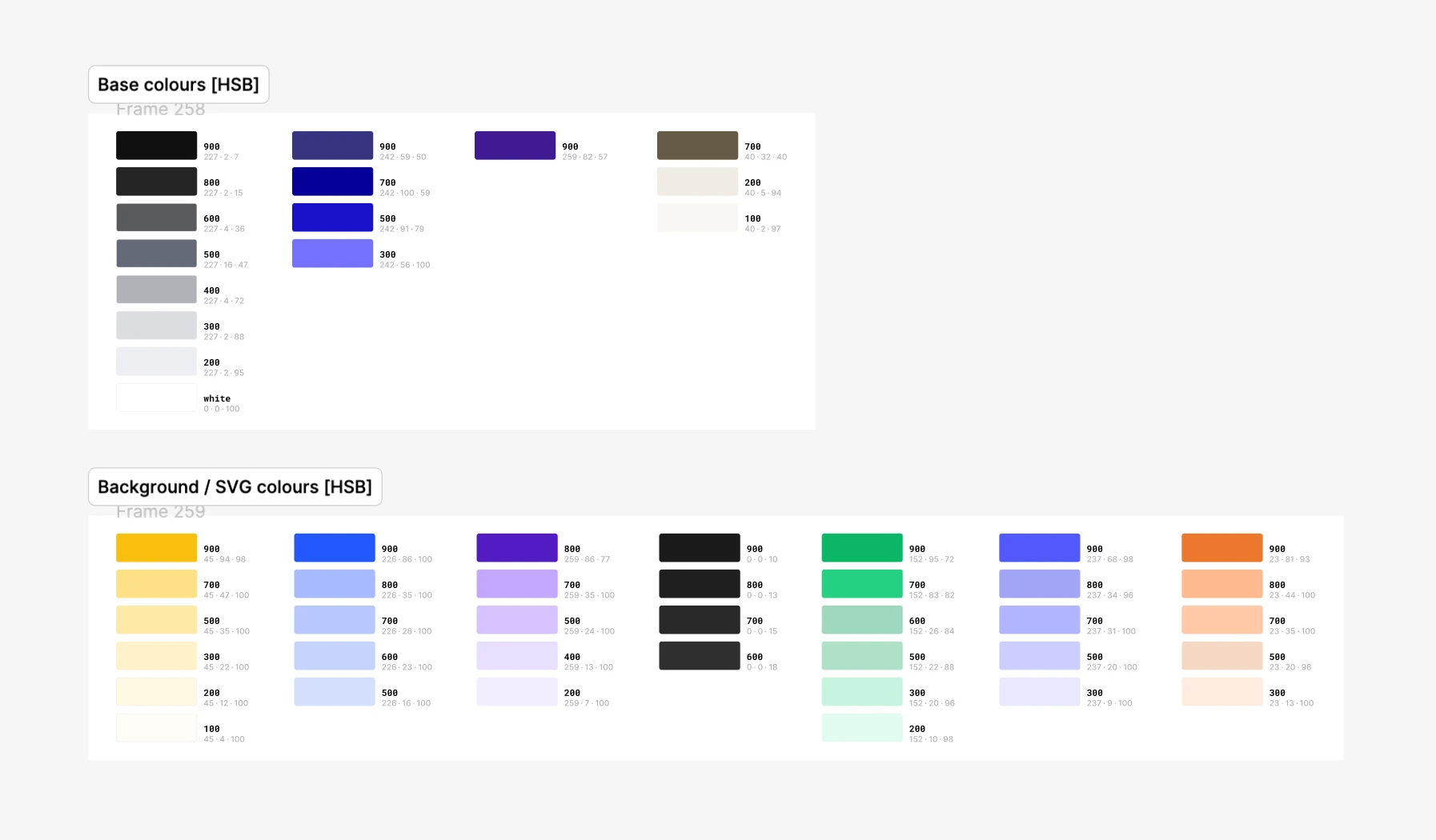
I generally separate the file into separate pages for colours, components and pages/views (to show how the modules come together). If there are SVGs, I’ll handle those separately.

Looking back over the last 12 months, how do people find out about you?
- Collaborations: 60%
- Word of mouth: 20%
- Newsletter advert: 7%
- Previous work: 13%
What elements of the process create speed bumps or challenges? How do you get out of these ruts?
Sometimes a section just isn’t working or I’m lacking inspiration for how to visually present it. It can be difficult to get out of that, but I’ll generally try a few tactics in that situation:
- Do something ridiculous (make something massive, try a silly effect) – sometimes that will spark a good direction
- Look at the balance of the section: is there something big, something medium, something small?
- Think about contrast: is there enough?
- Consider applying a design constraint to that section (or think about other constraints I might have applied already)
- Read through many of the design notes I’ve taken previously from courses/books
- Get feedback from peers and colleagues
How do you make decisions?
Recently, I’ve been trying a new approach: make decisions quickly if they’re easy to reverse, or slowly if they’re not. I’m trying to encourage this thinking with clients, too: reminding them that a lot of content and design decisions can be edited/changed later can help unblock project momentum.
More generally, I’ll try to make decisions based on discovery answers and known best practices or user tests.
Favourite tool, resource or course?
- Resource: Eagle for storing/tagging inspiration, Lyssna for user testing
- Courses: Learn UI Design, Form Design Mastery, Show Them
Where can people find out more about you, keep up-to-date with what you’re doing or give you money?
I’ve been completely social media-free since 2023, but I have a blog and newsletter at davesmyth.com, and my studio is at davesmyth.studio.